The Price Before the Price: What Card and Currency Fees Add to a Kerala Ticket
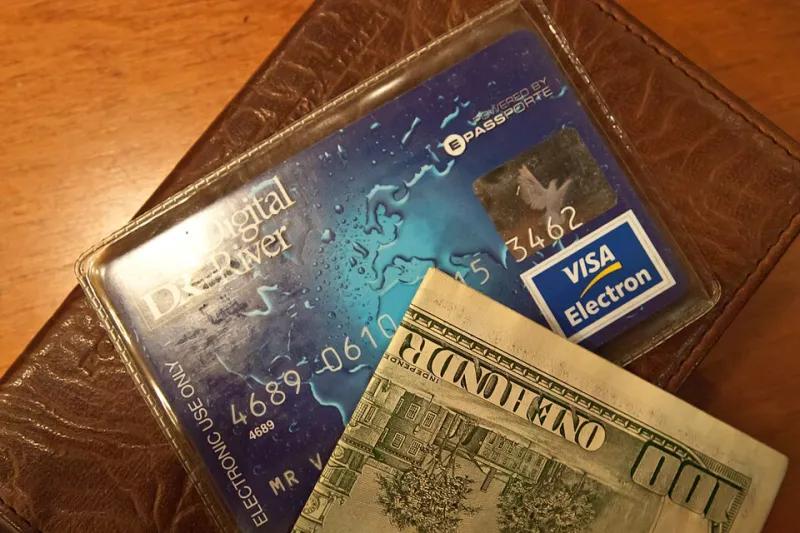
Photo: Vyacheslav Argenberg, CC BY 4.0, via Wikimedia Commons
The ticket price is the number you see. The checkout price is the number you pay. For US-based Kerala lottery players, those two numbers are often not the same.
A ticket that looks like a five-dollar purchase can quietly become six, seven, or more once card fees, currency conversion, payment processing, and informal seller charges are added. None of those fees show up in the draw result. They show up on your statement, a few dollars at a time, until a casual habit starts looking like a real annual expense.
At Kerala Lottery Today, we track results and gaming news, not payment processing. But if you are playing from the States, the cost of getting the ticket is part of the story. Here is where the invisible money goes.
Where the extra dollars go
The first layer is the foreign transaction fee. Many US credit and debit cards charge around 3 percent for purchases processed outside the United States or in a foreign currency. Some cards waive it. Many do not. On a five-dollar ticket, 3 percent is 15 cents. That sounds small until you buy often.
The second layer is the currency conversion spread. When your card converts US dollars to Indian rupees, you may not get the mid-market rate you see on a search engine. Card networks and payment processors can build in a margin. A spread of 1 to 3 percent on a five-dollar ticket is another five to 15 cents.
The third layer is the payment processor markup. Cross-border payments can carry processing fees, minimum charges, or platform markups. For small transactions, fixed fees hurt more. A 30-cent charge on a five-dollar ticket is 6 percent before any currency conversion happens.
The fourth layer is the informal seller or agent charge. This is often the largest and least transparent piece. An agent may add a flat fee per ticket, a percentage of the ticket price, or a rounded exchange rate that favors them. A one-dollar or two-dollar charge on a five-dollar ticket is not a rounding error. It is a 20 to 40 percent markup.
The five-dollar ticket that costs seven
Imagine a ticket listed at five dollars through an overseas seller. Your card charges a 3 percent foreign transaction fee: 15 cents. The processor adds a 3 percent cross-border markup: another 15 cents. The currency spread costs roughly 10 cents. The seller adds a 1.50 dollar service fee. A small rounding charge adds 20 cents.
That ticket now costs about 7.10 dollars. The draw has not happened yet. You have not won anything. The price already moved 42 percent above the sticker.
If the seller instead charges a 30 percent agent fee, the five-dollar ticket becomes 6.50 dollars before card and currency costs. Add another 40 to 50 cents in financial fees and you are near seven dollars again. The exact numbers vary by seller and card, but the pattern does not: the smaller the ticket, the bigger the percentage hit from fixed fees.
Why regular players feel it more
A one-time seven-dollar purchase is not a crisis. A weekly habit is different. Five dollars a week with two dollars of invisible cost is 104 dollars a year in fees alone. Three tickets a week at the same markup is over 300 dollars a year before you count the tickets themselves. A daily five-dollar habit with two dollars of fees can approach 730 dollars a year in added cost.
That is the part that gets missed in the usual lottery math. Players compare the ticket price to the prize. They do not always compare the all-in cost to their actual budget. The fees do not compound like an investment, but they do accumulate like a subscription you forgot to cancel.
The fees you can see and the ones you cannot
Visible fees include the agent's service charge, a card's foreign transaction fee, and any checkout surcharge. Invisible fees include the currency spread, the processor markup, a rounded exchange rate, minimum charges on small transactions, and failed-payment fees if a transaction is declined and retried.
There is also a collection-side cost. If a prize is eventually paid in rupees and converted to dollars, another currency spread may apply. That is a separate issue from buying, but it belongs in the same mental folder: the lottery transaction does not end at the ticket counter.
A practical cost audit
- Check your card's foreign transaction fee before you use it for an overseas purchase. A no-fee card can save real money over a year, but only if the purchase itself is legitimate and allowed by the card's terms.
- Ask the seller for the all-in price in US dollars before you pay. If they cannot give you a clear number, treat that as a warning.
- Ask for a receipt that shows the ticket price, the fee, the exchange rate used, the draw date, and the draw number.
- Compare the total weekly or monthly spend, not the per-ticket price. A 50-cent difference per ticket becomes 26 dollars a year at one ticket a week.
- Avoid stacking small transactions. Fixed fees hurt most when you buy one cheap ticket at a time.
- Keep a simple ledger. Ticket cost, fees, and total spent. The number can be sobering, which is the point.
The bottom line
The advertised price of a Kerala lottery ticket is only the starting line. For US players, the real cost includes the payment rail, the currency conversion, and whatever the seller adds on top. Sometimes those costs are fair. Sometimes they are hidden. Either way, they are real.
If you play regularly, calculate the all-in cost before you call it a five-dollar habit. The ticket may be small. The annual total is not.